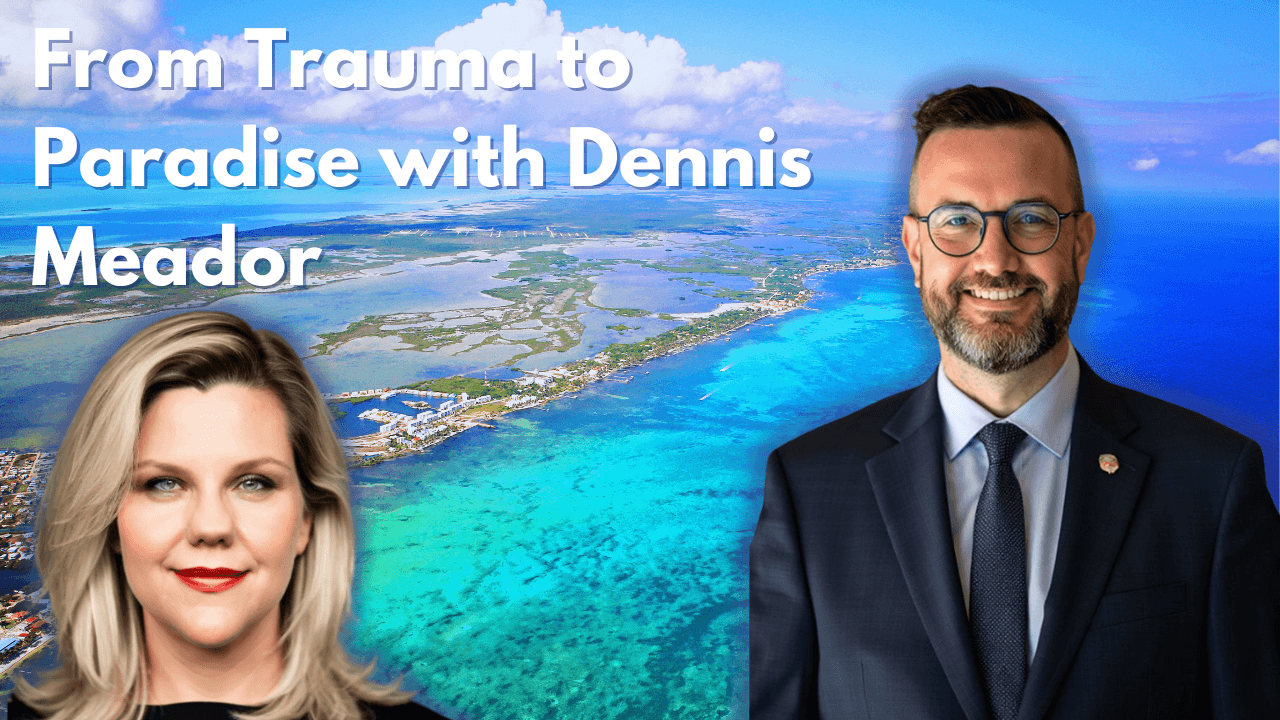
Dennis Meador is the founder of the Legal Podcast Network and a master at turning raw authenticity into multimillion-dollar business growth. Dennis shares his remarkable journey from a childhood marked by chaos to building a thriving remote company while living on an island in Belize (and soon relocating to Mexico for family reasons). His story is a powerful testament to resilience, embracing awkward moments, and the mindset that “if I don’t ask, the answer’s already no,” which propelled him from selling services door-to-door to leading a team of over 65 people serving hundreds of clients.
At the heart of the conversation is Dennis’s expertise in podcasting as a transformative tool for professionals, particularly attorneys. He explains why podcasting stands out as the most frictionless, authentic form of media today, allowing busy experts to invest just 30 minutes of time to generate a full month’s worth of marketing content, from audio/video episodes and social clips to website material and even emerging TV channels. Dennis breaks down practical advice on building authority through targeted, question-driven shows that address client fears and needs, why lighting and presentation matter more than fancy setups, and how genuine connection at scale turns listeners into ready-to-work clients without forced rapport-building.
This episode is packed with inspiration for entrepreneurs, leaders, and anyone seeking freedom in both life and business. Dennis opens up about burnout, the value of therapy and strong teams, avoiding echo chambers (even with AI), and the importance of self-monitoring to stay grounded amid success. Whether you’re drawn to the comeback story, podcasting strategies, sales courage, or the pursuit of a paradise lifestyle earned through hard-won lessons, “The Power of Doing What Others Won’t” delivers raw, actionable wisdom that reminds us: your journey, even the painful parts, can become your greatest advantage.
Watch on Spotify.
Timestamps
- 00:00 Intro
- 01:02 Life in Belize
- 03:34 Legal Podcast Network
- 05:29 Why Podcasting Works
- 08:44 Guesting Strategy
- 13:10 Podcasts for Business
- 22:33 Trauma Built Origin
- 28:32 Delegation Pays Off
- 29:24 Scaling a Bootstrapped Company
- 32:01 Trauma Built Confidence
- 35:21 Burnout and Recovery
- 36:53 Confidence and Extroversion
- 39:01 Therapy and Support Team
- 43:04 Self Monitoring for Balance
- 46:51 Avoiding AI Echo Chambers
- 50:57 Where to Find Dennis
Links
Transcript
Kathy: Welcome back to Zantastic. This is the podcast where we talk about what makes you fantastic. No. No matter what kind of background you come from, your life can be fantastic. And my guest today is a perfect example of that. Dennis Meador is someone who started out his life with numerous challenges, but because of his unique way of seeing the world, those challenges ended up turning into opportunities.
Opportunities that have led him to where he is today, living on an island off the coast of Belize and running. A multimillion dollar company helping other individuals get online with podcasting. He is well spoken, easy to listen to, and we talk about everything from entrepreneurship, podcasting, and how his life turned into what it is.
It’s a fascinating story. I think you’ll get a lot from this. Thanks for being here. Enjoy the conversation.
Kathy: Dennis Meador, thank you so much for being here today. How’s your day going?
Dennis: It’s good. It is, I think 82 degrees today. Um, little slight breeze. I actually live on an island in Belize, uh, San Pedro, so you know, it, it makes for a nice day whenever things get a little crazy in my little 10 by 10 office here, I just walk out a hundred feet that way, not even a 50 feet that way.
And I look out on the backside of the island, or I can walk about a hundred yards that way and, you know, be look out on the Caribbean, so you can’t ever really complain when that’s life, right?
Kathy: That is the end goal. To live in paradise, to live in a place that inspires you and keeps you connected. Nice.
Dennis: Yeah, it’s not, we’ve been here about three years. We’re actually getting ready to move. Um, we are moving up north, still staying in like, kind of the Yucatan, um, Merida, Mexico, which is just below the Gulf of Mexico. My wife is gonna, we’re gonna be having a baby this fall, and so we need better healthcare, um. On the island here they’re like, yeah, this isn’t the best place to have a baby, so you know, we’re gonna go north.
Kathy: Nice. Well, congratulations. That is so fun. Thank you. How did you end up in Belize?
Dennis: So my now wife, the one that I’m moving to Merida with, so three, I guess it’s been four, almost four years ago now. We came and we visited, uh, over spring break.
She was a school teacher at the time and I’ve worked remote for years. Um, had my own, you know, kind of digital marketing company, so had freedom with that. And she’s like, man, it would be awesome to move here. And I said, we can if you want. And so we did. We were here by, uh, December of that year and you know, we just hit our three year mark, uh, two months ago.
Kathy: Amazing. So, is the internet good or do you do the starlink thing?
Dennis: Very good internet. That was one of my deciding factors. Uh, yeah, the country of Belize put in fiber optic internet from end to end in during the pandemic. And so, um, you know, I’ve got. I, I, I don’t wanna say great internet and, and then it’s gonna go out, right. But, you know, I would, let me put it this way, the electricity goes out far more than the internet does here.
Kathy: Oh, really? That’s kind of hilarious. You never think about that. Yeah. But you got probably backup generator type of thing going on. Yeah, yeah, yeah.
Dennis: You gotta have generators and, and, um, you know, solar power and all that fun stuff.
So we, we try to have that in place.
Kathy: Yeah. Cool. So what kind of digital marketing do you do?
Dennis: Um, you know, I’ve been in the digital space since the early two thousands, and so I’ve kind of run the gamut. You know, started with websites and SEO and um, you know, did you know, kind of that stuff for a while. Then kind of went to like overall branding social media in like early 2010.
Um, kind of became my forte up until probably about 2018. Um, did some SEO and stuff in the middle there. And I’ve primarily worked with attorneys, most of my career, although I have worked with professionals across all things I launched two years ago. It’s called the Legal Podcast Network.
And essentially it is a podcast centric, uh, marketing system that’s really cultivates authoritative positioning. Um, we work with primarily attorneys. We’re getting ready to launch the Authority Podcast Network. And basically what we do is we take a podcast session, um, you know, we have like centered questions around our client’s client profiles.
We provide hosts and producers. They just show up and answer questions. We then turn that into an audio and a video podcast, put it on about, I don’t know, 30 different places there. We create shorts, reels, audiograms, static ads. We run all their social media off of it. Uh, we create website content. We’re getting ready to launch a TV channel.
Uh, a couple of ’em actually, uh, with the podcasts on them, and then launch also a couple of guesting services. So, you know, just a light little thing that we do. Not much. But no, we, we try to maximize the time of our clients and we’ve seen a lot of success with it. Where we’re coming on about two years. I bootstrapped this, started with my VA I’ve had for five years, had a guy doing some contracting on the side for me. He now runs that whole team and we’ve got about 65 people on the team and 200 and something odd clients. So it’s been quite a ride for not officially two years yet.
Kathy: That’s pretty amazing. Podcasting is kind of cool because it. Well, I’m gonna ask you tell me why podcasting is so cool. I’ve got opinions, but I’d like to hear yours.
Dennis: Well, I mean, there’s tons of reasons. So, you know, first and foremost what I like about podcasting is the ability to, you know, pick and choose your content. Like, I love the, uh, like I listen to cult podcasts.
I can’t get enough of them. Probably ’cause I was kind of exposed to them when I was younger, things like that. So now I can understand like the cult uh, thought processes and things like that. But you know, so it allows you to kind of tailor your content. Secondly, especially on the audio side, it’s frictionless.
So if you wanna listen to a podcast and go for a walk, if you wanna listen to a podcast and work out, if you wanna listen to a podcast, just sit on your, your deck and just kind of enjoy the evening, whatever. It’s the only, um, frictionless form of media that we really have. Um, and then the other thing I really like about podcasting is from a business standpoint.
It allows you to connect with people and it allows you to multiply your time tremendously. We take a half hour of our client’s time and we cultivate a month’s worth of marketing with daily posts on 10 outlets, website content, blah, blah, blah, blah, blah, all that stuff, just from 30 minutes of sitting there talking and answering questions.
So there’s several reasons of, uh, why it’s awesome. Um, we’re definitely reaching that tipping point societally. You’re seeing ’em on Netflix, you’re seeing Amazon come out with them. So, you know, it’s, it’s, it’s very accepted. And then there’s that, it’s that last like, sort of like authenticity opportunity. A lot of people have lost that kind of sense, especially with AI and everything else that’s out there, you know, overproduced Media.
And, you know, I tell people, you know, perfection is the new plastic. More now than ever, you can just go out, really be yourself, um, be your raw self. Not necessarily every scar and every, you know, faux pax that you have or that that is in your life, but it’s just an opportunity to go out and really just be genuine, authentic who you are, and then that you put that out to the masses and then people find you.
Or if you’re good, you help people find you even quicker.
Kathy: Yeah, it, there’s something to that authentic signal of who you are, where it’s not, not an image, it’s not a blog post. It’s not, it’s not curated content that’s all very packaged. It’s, it’s you, and your voice and your mannerisms, and it, it almost takes that one-to-one conversation that somebody used to have in the old days of like sales meetings and stuff, but it brings it to the digital world in a way that nothing else does.
And that, that’s one of the reasons I, I love it so much is, and it in my interviewing too, it’s like I can ask like super interesting questions. Like I ask questions that oftentimes many other people don’t, and I like it how I can get to a place where I can help people think about themselves as a guest in a new way.
And I, it’s just fascinating to me of the conversations that I’ve been able to have. What would you say for, for guests like. Because I, I know a lot of people, like most people are looking to be guests, right? Rather than start mm-hmm. The business of being in a podcast. What, what should they think about when they’re guesting on a podcast?
Dennis: Uh, I think a few things. One is why are they guesting? You know, some people, they’re guesting for a very specific reason. They wanna promote their book, they wanna promote their brand, they wanna promote their company, you know, and, and, and those are fair reasons if that, if you’re honest about it. I think some people, you know, they, they, they kind of slide in and then all of a sudden they’re just talking about their company and blah, blah, blah without really even being prompted or asked.
And so, um, you know, I think that that, that’s one reason to do it or what I would tell that person. But you know, I think that the other thing is, is it’s an opportunity to have conversations that you otherwise wouldn’t have and to connect at scale like. You know, I live on this little island and, and there are people that listen to, watch and pay attention to me that I never even, I’ll never even, I don’t even know it.
I was at my local butcher shop. Country Meats just down the road, right? So I go down there and my golf cart, and the guy’s name is Francisco, and I’ve been shopping with him ever since He opened up his little meat store. And I was talking to him and he was saying something about his business and I just kind of mentioned casually like, oh yeah, I do a lot with business.
That’s kind of my thing. I dunno if you know what, pay attention, but I actually do still work for a living or something. Like he is like, oh, I know. I listened to all your podcasts. I don’t understand a lot of it, but I. I really like it, you know, and so you connect with people in a way you just don’t even know.
Same thing. Um, I go to the same little coffee shop, just maybe about two blocks, in essence, of from where I am. And there’s this one young lady, uh, Brianon and we kind of tease all the time. She’s about the age of my youngest daughter. So, you know, I kind of like tease and joke with her, and she’s kind of tough-minded little young lady.
And I like that. I like people like that. And then I said something and she goes, oh yeah, you said that on that podcast the other day. And I was like, what do you mean? She goes, oh, well I follow you on LinkedIn and I have the thing, and every time you post on LinkedIn, it comes to my thing and I have you on YouTube.
And every time a new, every time a new uh, podcast comes out, I, I watch it. And I was just like. Like, I mean, how can. I never would’ve been able to connect with those people in that way. Yeah. If it weren’t for podcasting and now extrapolate that through all the podcast guesting that you can do, all the connections that you can make, and that is to me, one of the great benefits is you can connect to people at scale, and the advantage as a business owner is if I’m connecting to my clients at scale, then when they come to me, there’s already that relationship. I’m not cultivating and building rapport and you know, oh look, you have a, you know, you have a candle in the background.
Oh look, you have books. I read books, kathy. We should be best friends. The, you know, like that sort. Fake rapport thing they teach you to do. Yeah. But like these people literally come to you and they’re like, Hey, been listening to your podcast, love what you do. You know, you said this, this, and this. I need help with this.
I’m ready to work with you. And you’re just kinda like. Oh, okay. Yeah, so there’s a lot of advantages to, to guesting on a podcast. And again, it depends on what, what you’re really trying to focus. For me, it’s a way for me to give back and to mentor and to talk about, like, you know, the struggles I’ve been through in life to talk about how I went from.
Somebody who’s in a certain socio uh, economic situation and now being in a different socioeconomic situation. Somebody who graduated high school with a 2.43 GPA as I like to tell people, magna cum barely. And you know, 1,012 out of 1543 in my graduating class. Yet I’ve been making money since I was 14 years old.
I just wanted the slip a paper so I could make more money and not have to show up someplace and take the test so that I could show them that I wasn’t a dummy and I could move on in life. So like that’s the opportunity that podcast gives you. It, it gives you a chance to tell your story, share your wins, share your defeats, and hopefully be of help to somebody else.
Yeah. And so, you know, it could be any one of those reasons, or it could be a combination of all of them.
Kathy: I wanna ask about your, your path, um, from one socio-economic standpoint to the, to where you are now, but I have one question before we leave podcasts behind. Sure. Are podcasts good for, are they good for a business to host, should a business start a podcast?
Dennis: Absolutely. Absolutely. Yeah. I mean, that’s what I hang my hat on. So yeah, there’s really, there’s really come, there’s really two things that are coming. You know, like, so you have podcasters who have a business, so there’s the, the hobby of podcasting, you know, and, and sure it’s more technical, but you know, to me it’s like Dungeons and Dragons, video games, pickleball, podcasting.
Like it’s, it’s a thing that people do, you know? And. The book clubs, whatever, it, it’s a hobby and that’s primarily what it’s been historically. But now we’re starting to see people become like, you know, famous through podcasting. And so then other people are like, well, I wanna podcast ’cause I wanna be famous.
But besides podcasters who maybe have a business, what we’re really seeing is a shift now where businesses have a podcast. And not all podcasting is specifically for conversation connection. It can be something where help is given, and I’m just gonna use my example because this is kind of my, I’m not gonna say I came up with this idea, I’m sure it’s out there, but as I kind of thought through how can I help attorneys podcast in a way that will benefit them?
Yeah. And so what we do with our clients is we find out who are your clients, okay? You’re a divorce lawyer. You primarily work with men. High assets, uh, they want to have custody. Okay? That’s who you are. You’re in the Miami, Florida market. So we’re actually gonna do question and answer podcasts for that specific group of people answering the questions that they have.
We’re gonna go really deep, and then we’re gonna go wide. We’re gonna talk about. How do I make sure I get the boat? How do I make sure that, you know, I have majority custody? How do I, you know, and so we really get granular and that’s what it allows businesses to do, is it allows them to connect with expertise and their marketing stops being about how great I am.
And it starts being about what needs do you have? Yeah. So that by the time people eventually come to these businesses, the relationship’s already built. So there’s a tremendous opportunity for podcasting for businesses because for the first time in history. We’re not buying infomercials for 30 minutes.
We are setting up a camera talking for 30 minutes, and people are sitting down and on purpose listening to what we have to say usually because there’s a need or an upcoming need or a fear. And if you can assuage fears, provide clarity and give answers in a moment. You’re not just helping your business, you’re helping society as a whole.
Kathy: Yeah.
Dennis: And so that’s why I’m a big proponent of businesses who have podcasts.
Kathy: Yeah. Yeah. I started a podcast with, um, software company that I worked for, and, um, software’s all about trust. People buy the product when they’re sure that the developers are someone that they can trust and they’re, they’re going to build their business based on the software.
And so I, I, I pulled my dev along with me. Um, you know, we will make it real easy. It’s just gonna be audio and us talking and I’ll edit it and you’re gonna sound awesome. And they were really scared at first, but then by the end of it, they, they were doing really well because it established that trust, new features coming in the product, they could come on and talk about it and it.
It was, it sold, I think, and established that brand better than anything else. And it wasn’t about, you know, the product is so great, or I’m so great or anything like that. It’s like, no, here’s what’s coming and how you can use it. And it’s like education, it’s connection. It established not just the brand of the product, but it established the brand of the developer.
You know, so they’re on to do other things, but I know people are following that developer.
Dennis: Mm-hmm.
Kathy: Because they had a voice. Yeah, exactly. And then I come on video, like, you’re gonna do video because you’re cute and everybody’s gonna love you. And so it’s
Dennis: Exactly,
Kathy: yeah. Yeah. It just works so, so well, and it doesn’t have to be scary, right?
I mean, the people are like podcasting, they don’t even know where to start. But there’s so many tools that people can use. Like do you, like just get started, right? That.
Dennis: Yeah, I mean like even just Descript right now is there’s a product, Descript, it’s like very low bar, very low friction. And if you’re semi-technical and you’ve got the time, you know where I kind of sit in the marketplace is you probably don’t have time for this, but you see where it would benefit you.
So let me just take care of everything but the talking and I provide everything else. But yeah, but you know, if you have the time. The tools are there. You know, I probably got, and you know, I’m bragging about my setup and I told you my TV’s not working, so it looks like I’m like just in like a dark place.
But you know, I got a DSLR camera there, roughly 750 bucks. I got a couple of lights, I think that was a couple hundred bucks and a hundred bucks. And then I have this microphone that’s like 300 bucks. If I have five grand in this room, and it’s probably closer to 3,500. I’d be surprised. And yet, you know, with a pretty low barrier of entry, you know, I sit in this office and I did 99 podcast guest spots last year.
I’m doing, you know, 3, 5, 7 a week already. I do a couple of my own podcasts, uh, that are out there. Um, and yeah, I mean it’s, it’s a low barrier of entry. And, and the other thing is, like you talked about, I can’t tell you how often. Someone will like connect with me on LinkedIn and they’ll just be like, Hey, I’ve been listening to your podcast.
I want a podcast. How do I work with you? Like, like I, I remember one Friday, a couple weeks ago, three, it was like three straight messages, just like that. And I’m like, and I’m like, why on earth isn’t every business doing this? Because here’s the thing, you better do it now before everyone is, because once the marketplace is inundated, it’s a commoditization.
That’s the same thing that happened to most knowledge work is, it was commoditized by the internet. And so there’s a new era, a new opportunity to come in, and it’s no longer about having the first shiniest new website or showing up on the front page for the highest number of terms.
It’s about actually building an audience or building yourself into the algorithm to where when people are asking these very important questions that are very, you know, uh. You know, there’s a lot of fear for them. You are the one who has cited, you’re the one who’s answering it. You’re the one building the relationship.
Kathy: Yeah, yeah, for sure. I, I think it’s, it’s so amazing and really, what, what would be the one piece of tech that you say, like, if you’re gonna spend money on any tech, what, what’s the one thing people should spend on.
Dennis: I think there’s really two your camera, uh, but you can do that fairly inexpensive,
but lighting. What we’ve noticed, ’cause we do 200 and something odd, um, firms that we do shows for right now, you know, the lighting is the biggest issue. Um, you know, get a couple of, uh, you know, light canceling or whatever room darkening, I forget what they call ’em, you know, curtains and, you know, spend a few hundred dollars on setting up a proper lighting kit and having a decent camera in front of you.
And that makes all the difference in the world. You know, you see one podcast and the guy’s just. Sitting in his living room and he is got kids running in the background and he kind of half blurs it out and he’s got all, he’s flooded with natural light on top of, you know, fake light coming in and you know, you’re just looking at him going, okay, you’re telling me that I’m supposed to trust you with a $2 million issue.
Like, you know, so I, I would say lighting in combination with a decent camera.
Kathy: Yes, for sure. I have to tell you, ’cause it just popped in my head and made me laugh. I was on this Zoom call and this guy had terrible lighting, a fake, you know, like. Zoom background.
Dennis: Oh, yeah, yeah, yeah.
Kathy: And then he was eating, it was just like no self-awareness whatsoever.
I’m like, I had to take a screen capture of it just because it was like the worst. Like, just don’t do this. Like, you’re gonna be okay no matter what you’re doing. Just like, here’s the worst case scenario. Just be a little self-aware that there are actually other people there looking at you. It’s not just you, you know, with a bowl of cereal.
Yeah, in your room. It was so funny.
Dennis: Yeah. It’s, oh, and I’m sure we’ve done this long enough now. We probably could swap tons of war stories like that. Yeah. And just people not being aware of what’s going on and you know. But at the end of the day, what you put out is supposed to be who you are.
Yeah. And you know, some people will spend more money on the desk in their lobby that. 82% of people never even wanna walk into if and still be your client. They’ll spend more on that desk than they will spend on how they look online. Yeah. And it’s like, you know, the, the sort of like old world thinking of like where value is.
Like no one’s gonna walk in the door and be like, is that a $3,000 desk? Well, I wasn’t sure, but now I definitely wanna work with you. That’s just not gonna happen. But if they look at a video and they see that you’re presented professionally and the lighting’s right, and you know you speak well, and you’re articulate and you’re, you’re calming and comforting, or whatever it is, you’re gonna have a much better chance than that $3,000 desk ever gave you.
Kathy: Yeah. Yes, for sure. Such good advice for anyone. Um, I want, I am really curious about your trajectory of your career. You have a, a lifestyle and a business that you have chosen. You are not living in a place that you don’t like. You are living in a place that inspires you. You have a business that I just, I just, from hearing you speak, you’re lit up about it, you’re excited, you’re motivated.
Um. You didn’t come from there. How did you get here?
Dennis: You know, I, I like to use the phrase, um, I am natural born and trauma built. So, um, you know, life is, we have to all be willing to embrace our journey because where we are, we only got here because of where we were. And so like, you know, I was an Air Force brat the first seven years of my life, and as far as I can remember, it seemed semi-normal living on an Air Force base.
We moved a lot, I think eight or nine states during that time, and that probably taught me to make friends instantly and not be afraid to talk to people. You know, again, trauma building, something that it is to my advantage, but. At eight years old, my parents got a divorce. My dad kind of went off and did his thing.
Nothing too crazy, but, you know, work and living his life. My mom started dating like drug dealers, uh, like a crack dealer, heroin dealer, pimps, uh, leaders of the Gangster Disciples out of Chicago. Our house became like a gang house, drive by shootings, all people crashing there all the time, party night, every night.
So at 8, 9, 10 years old, I went from kind of just, you know, well, I’m just a kid to like paying attention to like my sister, making sure she was fed. Every morning we would get up, take 2, 3, 400 beer cans, dump ’em out, you know, rinse ’em out, walk down to the gas station. We got a nickel for each beer can. So that’s how we usually ate for the day.
$10, 12, $15, depending on how big the party was that night before. Um, you know, my mom was in some not great relationships where. 2, 3, 4 in the morning, she’d be battered, bruised and I’d have to like take her and my sister crying and you know, find a place for us to stay for the night that was safe. And so, you know, kind of being in that situation and it around, you know, 11, 12 years old is when I really realized like, I can’t live here. My mom got me drunk for my 11th birthday. That was her gift to me. She bought me a two liter bottle of, I don’t know if you’ve ever heard of a thing called Purple Passion. Um, but it was a, uh, it was essentially grape soda with Everclear. Um.
So
Kathy: is that a Mad Dog MD 2020 type of thing? Yeah,
Dennis: it, it’s like it’s older, tougher cousin.
Kathy: Okay.
Dennis: So, so, um, you know, I, and, and honestly that was the only time I drank until I was 36 years old. Just ’cause I’ve been exposed to all of that stuff. Yeah. And so I realized, I was like, you know, with drinking, and I saw the drugs and I saw everything around me and I saw the abuse and I saw, you know, the police coming in our house and I was just like, I do not want this.
I don’t like being dirty. I don’t like being, having roaches and mice all the time around me. I, you know, it’s just, I knew like, I’m gonna get outta here. I don’t care. When I grow up, people ask me, what do you want to be? And I just would say, not poor. That’s all I knew. So 13 years old, my dad gets remarried and um, you know, she has two kids.
There’s me and my sister, so it’s his, hers end up having two more there. So there’s six kids. A bit of a culture shock. You know, I came from like. I came in and they, they were like, my dad met her in church and everything, so they were like churchy. And I put in my, like, know if you know who Eazy-E is, but I put in, uh, my Eazy-E where, you know, it, it was gangster rap, like NWA, like that group.
And so I put in my music and I put up my posters of like girls in thong bikinis, slung over cars. And like, you know, to me I’m like, this is just my life. I didn’t think it’s my bedroom. I gotta, and like, they’re like, what’s going on here? And so I moved into kind of the middle class neighborhood, probably lower middle class.
Like my parents didn’t make a ton of money, but they did enough to kind of keep a roof over our heads. But that was kind of like what they said. You got a roof over your head, you got food in your belly. You might not be super full, but you’re not dying or starving. And you got clothes now that you, clothes might have come from the church pantry, but there’s still clothes on your back.
Well, my stepmom decided and, and appreciated, she worked, so we could go to a private Christian school. Well, the kids in the private Christian school are upper middle class to upper class people. I’m on the very bottom rung, and it was a step up from being, you know, in the lowest socioeconomic place. But I’m at the, I’m at the bottom of the, of the middle class and I was just like, you know, and I think the thing that really set it off for you, I was about 14, uh, years old.
14, 15. It was 14 I think. I had a buddy that was making money and you know, he, he seemed to, he was like me poor, but they were always just making money kind of hustling. And I was like, man, how are you just making money? Like, I, like, I knew how to make, get cans and pay attention and things like that. But like, so we went, and he had told me about shoveling snow that you can get like $20 to shovel people’s walks.
So I got my stepbrother and his best friend and we started knocking doors and. After about an hour, I had gotten two. We were taking turns, but they didn’t like knocking on the doors and I really didn’t like shoveling the snow. So I was like, Hey guys, let’s do this. I’ll knock on the doors and get the customers, and then when you’re done, you just come to the next spot and then we’ll do the next job and we’ll do that and we’ll make good money until we’re done.
And they’re like, oh, that’s great. And I was happy I didn’t have to do that. So next time it came, I went right back to the houses that used us. So we made more money ’cause we knocked out a bunch of houses in a row and then added to our thing. And then we started having their friends coming. And then we started the spring came and then, you know, we were, you know, mowing lawns, uh, doing paper routes, raking leaves, but essentially any job for a 12, 13, 14-year-old boy.
I had the job, I collected the money, and then my brother and all of his friends did the jobs. So that was my first kind of venture. Now all of a sudden I’m making a few hundred dollars a week, regularly, some weeks even more than just a couple hundred bucks. Some weeks, making more than my own parents. And that’s kind of how I started, like understanding, wait, you make a lot more money helping other people make money than you do, making the money yourself.
And that was just kind of the thing that I did, for the most, part through the rest of my career is delegate. Figure out ways, unite people. And so now here we are. You know, 30 years later and in 21 months, I’ve taken a company that I bootstrapped and I’ve taken it from me, my VA, who I’ve had for a number of years outta the Philippines.
Now we have 65, 66 people in the company, over 200 clients. We did seven figures our first year. We probably have a two, uh, two x on that this next year. So, and it’s all been just from the lessons I learned as a young man, which was i’m gonna make a lot more money by helping other people make money who are kind of afraid to do the things, and really just embracing awkwardness in life.
I always tell people like I have learned to, to maneuver my way through society by spotting the things that are awkward that people don’t wanna do, and getting very good at those moments. Yeah, like I sell attorneys for a living, and I barely graduated high school. Why? Because I, I’m not afraid of ’em and I, I, I feel like I can speak it in an articulate manner, which allows us to have a one-on-one conversation of equal intellect.
I’m not intimidated by them. I, you know, I know when they’re trying to pull this or that, I’ll even call ’em on it. Listen, you’re not gonna do that ’cause all you’re trying to do is position for this and I’m not gonna fall for that, blah, blah, blah, blah. So just learning to embrace the awkward moments in life has allowed me to go from selling services to soliciting donations to becoming a script writer, to becoming a manager of people who were selling ads and police magazines, or were grown men to selling doctors and putting together hospital patient handbooks at 20 years old to starting my first business at 23. By the time I’m 24, we’re doing three and a half million dollars for the net 25.
Moving to Romania. Doing that for a few years and just climbing up and finding awkward moments and things that people weren’t willing to do and just saying, well, if no one else will do it, I’ll do it. ’cause that’s a chance for me to get somewhere that I might not other otherwise have the chance to get to.
Kathy: You do the things nobody else wants to do too, like knocking on the door, not being afraid to talk to people. That’s, I think that stops a lot of people. I think that’s like such the key to success because no business exists unless there’s sales and sales. Is uncomfortable for a lot of people. It’s the knocking on the door and having to talk to a complete stranger and pitching a service. Like everybody’s afraid to do that, and it holds so many people back.
But you seem to have a knack for this. What? What’s the secret?
Dennis: I mean, the secret is when you’re eight years old and 10 years old and you’re knocking on the door of somebody down the block at 2:30 in the morning with your mom and your sister behind you crying, and your mom beat up and you having to, you know, convince this person to let you in because they know the guy who beat her and, you know, and, and you, you know, so it’s, I think it was.
Like I said, natural born, combined with trauma built. It was those moments and, and those opportunities. But I, I think it was, it’s also like for me, I’m of the opinion if I don’t ask the answer’s already, no.
Kathy: Right.
Dennis: So asking is pure upside in my mind. ’cause if I don’t ask, I already have the answer I was afraid of.
So how can I be afraid to confirm what I already knew? That’d be like being afraid to say the sky is blue. I already know the sky is blue. And don’t tell me because of light refraction, blah, blah, blah. It’s really whatever color. Please take my point for what it is. So. For me to say the sky is blue. It’s just like, I’m just confirming what I already knew.
It doesn’t, I’m not afraid to say that, and it’s the same thing when I talk to somebody. I’m like, Hey, well what do you think about this? Well, da, da da. Well what about that? Well, da. Also a little bit of parallel. I actually was a pastor, youth pastor, missionary for almost 20 years. From 16 to 35, 36 years old, and we were like the door knocking, street preaching, no television in the house.
King James only Bible, like we were like, that was the kind of church that my dad was in when I moved in with him. And then I kind of like latched into that and, and found a place into that. And so, again, like when I knocked on doors in, in that situation, in my mind I was like, if I don’t knock on this person’s door, they might go to hell forever.
Like that was my thought process. If I don’t go out on the street corner and tell people about Jesus, then these people might go to hell forever. I’m not saying I’m necessarily of that mind frame now, but that enabled me in those moments. So I think the necessity of, well, if I don’t ask what is the alternative?
The alternative is I’m already getting what I didn’t want. So it’s a hundred percent upside to actually not be afraid and just do the thing.
Kathy: Just do the thing. You had to grow up so fast and learn that so fast. And I You’re the oldest.
Dennis: I am the oldest of six.
Kathy: Yeah. I’m the oldest of three. Grew up in. Very tumultuous.
Uh, dad was a drinker and mom liked to use, liked to use money. They used money as a war between each other. So it’s long story, but I think you and I are similar in that respect of like, if I’m not gonna do it. Who’s going to? Exactly, you know, if I don’t go find mom’s checkbook and make sure the electric gets paid
Dennis: mm-hmm.
Kathy: We’re not going to have lights and tv. And I think the TV is probably a scarier thing to lose, but you, you, you have this like, if not me, who? I’ve got to. Mm-hmm. And I, and I think, um. It just drives people. I think it’s, it’s hard for kids to have to grow up that way, but if you can keep it in the right mindset, you can turn it around and it sounds like you did it.
Yeah.
Dennis: I mean, I, you can’t tell now, but I have a lot of tattoos and on my mid arm here it says, embrace your journey. Yeah. And I remind myself of all the, of that all the time. It’s like, you know, ’cause I, I, I mean, I’m in therapy and I’ve had to work through some things and, you know, I had like some health, mental health issues come out of just like suppressing it and, you know, basically, ’cause I was like a full-time pastor, have one or two businesses, had three kids, you know, I, I literally would 18, 20 hours a day, every day. I believed every moment must be monetized. And I did that until I crashed and burned and spent a year and a half in bed thinking that I had some sort of like MS or something like my dad. And so, you know, being able to just come back to that point in your life where you’re just like, okay, you know, my journey brought me to where I am. In order to be on this island, I had to be in the bed for a year. In order to be, you know, last year we had the privilege of traveling for about five months. Went to Thailand, Bali, eight or nine European countries over a couple of month period. You know, in order to do that, I had to be that kid who learned to knock on the door at two 30 in the morning and ask, because otherwise I wouldn’t have been that 19-year-old knocking on doors for churches.
And I wouldn’t have been that 25-year-old, you know, sitting in boardrooms or sitting in meetings with people who had way more education than I did, had way more credentials than I did, and I would sit at that table as if I belonged to it just like anybody else. Yeah, and I’ve always just, that’s been my journey is I’m supposed to be here whether you think it or not. Just push forward with that.
Kathy: But you did, did you start out with that kind of confidence or did you have to cultivate it?
Dennis: Um, I was definitely, that, that kid that like was during the first seven years again was a lot of church, uh, life and, you know, I was the kid who talked to everybody again because we moved so much.
I think, you know, my best friend is the kid in this playground that I might not ever see again in my life, but he is my best friend for today. So, you know, I, I. Was it there? I don’t know. But it definitely needed to be there rather quickly because, I mean, when you’re in that sort of situation, you either become an introvert or an extrovert.
There’s really no middle, normal ground. You can’t, I can’t be that kind of middle person that the majority of the people are. You’re either gonna be like, Hey, how are you? Uh, you’re my new best friend. Hey, let’s go do this. Or you’re gonna be just like sitting back in the corner like, oh, well. And I just didn’t like sitting back in the corner feeling like I didn’t fit in.
Yeah. So I always tried to find a way as quickly as possible to be in the midst of things. I was a kid, like on the playground where, when the games were being played, like just naturally, you know, because I’ve always had like a sense of like fairness and things like that. I would make the rules and I would, you know, oh, no, no, we’re not gonna, no, Bob, you can play.
Bob can play. He’s fine. Well, I know he is a little bit slower, but we’ll just all, every third step we’re gonna skip, you know, like, like I was that kid, so probably natural, but then accelerated in life because of the events.
Kathy: Yeah, yeah, for sure. Well, it’s probably better that way because I mean, you could either go external like you did and just go live life and, and push the energy out. But a lot of people go internal and then try to figure it out or overthink it and they get themselves, I think, into a lot of trouble. So you created a lot of patterns and experiences that showed you going external works and worked for you. And I think that was really foundational.
Uh. At least from the story, if I, if I may be an armchair psychologist for just a moment,
Dennis: that absolutely. I’ve got enough people analyzing me. What’s one more?
Kathy: Well, happy, happy to oblige. I’ve been in, my husband had a stroke four years ago and one of my friends was like, make sure you take care of you. And I’m like, I, I was dealing with hospitals and doctors and social and I was like dialed up to 11 and I’m like, I don’t know how to take care of me, but I know my husband’s friend, he is a PhD, educational psychology, and I’m like, I don’t wanna have to explain us to anyone. I just like you, you, you’re helping me. Yeah. So I’ve been in therapy for four years and it feels more like coaching now than it is like fixing. So, uh, but it’s, it’s helpful, you know? I mean, I, I don’t think it’s, um, a lot of, I think in the old days people were like, oh, you’re in therapy.
Like, it was a bad thing. But I think it’s like. It, it’s an upliftment.
Dennis: Oh, you know what I, it, I. If I ever write a book on leadership, it’s gonna be called, it takes a village to raise a leader.
Kathy: Mm.
Dennis: And one of the things I want to talk about is like, I have my therapist, I have my marriage therapist, which we do preemptive marriage therapy, just so we’re communicating correctly.
I have a psychiatrist, I have a, um, business coach, and I have eight directors, and I have an EA and you know what I mean? I have all these different people that, yeah. Help me be me. Yeah. And so like, I think if I decided I don’t need all that help, I would not be anywhere near where I could, where I am. Yeah.
And not to say that I’ve arrived or that I’m in any, any sort of place, that’s just to be all end all. But you know, I, 10-year-old me could not imagine the life of 48-year-old me. Yeah. Like if you told 10-year-old me, don’t worry about the roaches. Don’t worry about the hunger. Don’t worry about the kids making fun of you.
Don’t worry about any about that. One day you’re gonna live on a cool island with a beautiful wife, about to have a baby. You’re gonna have a business that you love. You’re gonna work with people that you enjoy. You’re gonna talk for a living. You’re gonna just like get on podcasts and talk to people, like you.
Your life is gonna be like better than you could ever dream. I would’ve been like, sure buddy. Man, these people are crazy, you know? So I’m thankful.
Kathy: Yeah. Oh, I, I love that you have that self-awareness of I can’t do this by myself. ’cause I know so many people, so many like people that I’ve even worked for and with CEOs who like.
It’s me, I’m the CEO, I’m the leader. I’m going to make the decisions. And they put all of this pressure on themselves. I think just like for fear of there’s like this fear that they have of not like asking for help and they burn themselves the F out and you can’t do it, can you? It’s like you have to have a team around you.
Dennis: Well, why do I have a team around me now? I didn’t have a team around me
Kathy: right
Dennis: in my twenties and thirties when I didn’t think I needed a team. So I just, I’ve just been that weird person who’s lived an accelerated life. So most guys my age aren’t hitting that burnout at, you know, late forties, early fifties, and then they’re half into like, oh boy.
And then, you know, fix some things. And they either have to become muscular because of their testosterone levels or whatever it is that they do to fix what’s going on and get to a better place. I’ve already been on that journey for 10 years because I laid in bed for, like I said, a year, year and a half.
Not, you know, cognitively not there. Like I, I, I would lose my balance and just fall over. I didn’t have control of my emotions. I would get instantly angry. I would cry at, you know, and so like, I know what it, what I will end up with if I leave it all up to me. Right. So like. I could be prideful and an idiot and hold on for a few years at a time and keep trucking and fool everybody.
Then fall flat on my face again. But like, what’s the point of that? I’m just gonna disappoint and hurt the people around me. So now that I know better, why not be better?
Kathy: So good. So good. But. You’re, you’re better now. But there are you afraid of like claiming that like tempting fate, like things are good now?
Like, because you’re, because I, I feel like the universe, God is always stretching us. You know, there’s always someplace else to go. There’s always something else to grow into. If you’re not growing, you’re dying. Right. So how do you keep that balance of when things are going super well of not getting too comfortable with it, of being open to the challenge,
Dennis: well.
I think there’s a couple of, a couple of factors in that. So one thing I do is I am constantly internally monitoring because I know like I’ve gotta keep myself at about a four to six is what I say. If I get to a seven or eight and I’m just, oh, going crazy and man things going great, da da da. Like, I’ll just like.
Get rid of some social media. I’ll less this. I’ll take more walks. I’ll just, or if I feel myself down in like a three, four where I’m just starting to feel like things aren’t going well, then I’ll get out in the sun and I’ll start doing other activities. So one thing I try to do is self monitor. Um, you know, am I afraid of things going bad?
I mean, reality is anything can go wrong at any moment. I’m gonna enjoy the moment that I have. To worry about what might be is going to take away from what is so while I’m going to prepare for it and set back finances and take care of relationships, and do the things I need to do to maintain what I have, I can’t live in constant fear of what will be right. Because what will be is there’s so many variables of it. I mean, I’ve been shut off from mainstream media since the pandemic. Now I say that things still, still sneak in. You can’t help but know what’s going on. But I don’t dwell on it and spend time on it.
Did you read this and can you believe they said that? And you know, all the stuff that is just commonplace now. Like I do the things I know I need to do to keep myself where I know I need to be. And I think that that’s the key. It’s, it’s just a, it’s, it’s a constantly, it’s a desire to be self-aware enough to where you can self-monitor with people around you who love you enough to say, Hey, man, you’re a little off.
You know. My wife, what was I looking for in a partner, a strong person? Because I knew that if I had somebody that just tucked in next to me and I could do no wrong. Then I was gonna fall on my face. You know, my directors in my company, like, I’m always like, like when they challenge me in a meeting that at the end of that meeting I’m like, guys, great job challenging me today.
I really appreciate that because I wouldn’t have seen it from that angle. So I’m constantly encouraging those who are around me to challenge me, to keep me growing. Otherwise, I create what I call my own echo chamber of awesomeness, right? We just listen to how great we are from everybody and then we, that’s when we get off the path of really just continual growth.
So I really try to stay away from that echo chamber of awesomeness when I have somebody that wants to be my friend. And I can tell they’re kind of like a sycophant, you know, kind of always like, oh, you’re so great. You’re just could do no wrong. Like your feet must never smell, you know? And I’m just like, I don’t have room for that person. I want somebody that’s to be like, dude, go wash your feet, man. Like your feet are smelling today. Oh, sorry. You know, like that’s what I want. So maybe that’s how I kind of try to monitor that is I try to surround myself with people who are strong enough to call me out, because I know if I don’t, I’ll just roll over people and end up falling on my face.
Kathy: You need to teach a class of to so many people, you know. AI is very sycophantic and I know a lot of people who like go into AI and AI’s like great idea. Like I’ve run a bunch of like stuff through AI and I’m like, no, I, I don’t want you to tell me that this is a great idea. I want you to tell me what’s wrong and what do I need to look for and what are, what are some opportunities that I’m not seeing?
Don’t tell me I’m awesome, but I know a lot of people who are like really going down these rabbit holes with ai that’s just telling them how awesome they are. Any thoughts on that?
Dennis: Yeah, I mean, well first of all, the user experience is everything. You have to understand with technology, technology desires to be used more and more because the more you use it, the more information it has, the better it is, and so on and so forth.
The people that actually mm-hmm. Came up with it, all of that. So you have to, that’s why learning how to write prompts and do all of that is so important. So I’m gonna give you this idea. I want you to look at it through the lens of this person who’s got this sort of critical mind who thinks this way.
And so you have to actually tell it, teach it just like my own people, like my eight directors, when they first start working with me, I’m the most brilliant man on the planet until they learn that it is safe to actually speak the truth. And, and we have to, if we’re going to use technology to our advantage, we have to tell the technology what we need, not what we want.
’cause it’s going to give us what we want, but we have to teach it what we need. And that’s why prompt engineering is such a important skill nowadays, because like you said, you’ll just create your own echo chamber because it wants you to come back and come back and use it and use it and use it. So it’s not naturally gonna go, what are you stupid?
No, no, don’t do it that way. Like, it’s not gonna do that unless you say, act like you’re a guy from Brooklyn who’s super, who’s super cynical and has known this sort of stuff for 30 years. Give me feedback from that guy’s point of view. Now you’re gonna get that point of view.
Otherwise, the natural point of view is you’re great.
Kathy: Yep. I know somebody who has created a synthetic team member, like has actual team members that he is a leader for, but he’s created synthetic team members, so like little copies of his people that he can talk to when that person is not available. And that plus the sycophantic nature of it, I’m just like.
Yeah, no prompt engineering. Making sure. I think it, it comes from, you know what, AI reflects back to you who you are. So if you are not open enough to hear a criticism and to hear, that’s not gonna work. Or even, what’s the matter you, dummy?
Dennis: Yeah.
Kathy: If you’re not open to hearing that kind of stuff, AI’s gonna reflect that back to you, isn’t it?
It’s going to give you what, what you are.
Dennis: It, it’s going to give you what, it’s what it’s cultivated about you. Yes. Yeah. But you, that’s why I say you have to keep prompting it, prompting it, prompting it. Tell me, okay, uh, okay. Look at it from this angle. Well, what about this? Is there something wrong here?
Does that make sense grammatically, is that something that, you know, like. And, and you use it to pick apart versus to build you up. Yeah. When you use AI to pick apart, you come up with a much better product.
Kathy: Sure.
Dennis: Or answer than you when you use it to just again, create your own echo chamber of awesome.
Kathy: Yeah. Oh my gosh. Yeah. Very, very cool. Lots for me to think about there. Dennis, I am. So you, gosh, this, this flew by. I, I wanna make sure respectful of your time, but you gave me so much to think about. I can’t wait. My, my fun. Like, I, I know I should have somebody to edit, but I love listening to these again, so I can’t wait to edit this one because I know I’m gonna pick up even more.
Um, for anybody that wants to find you that’s listening, where, where are the places that they can find you online?
Dennis: So if you’re intrigued by the concept of me helping you with the podcasting and content stack and authoritative positioning and the stuff I talked about in the beginning, my company is the legalpodcastnetwork.com.
We’re also in the midst of, of launching the authority podcast network.com. But we’ll at least have it at the bottom of our site on LPN site. Uh, but to connect with me directly where I really try to, this kind of communication and cut videos out of these things and talk about like, you know, leadership and authenticity and not being afraid to be real and how to come, how to cultivate a remote culture and just all the different things I like to talk about as a leader is LinkedIn.
Um, and so I, I post on there apparently too regularly. The algorithm’s kind of mad at me right now because, but here’s the thing, like. So I’m about to, I, I’m, I’m actually meeting with my team in about two hours. I’m creating what I’m gonna call social media in a vacuum. Essentially what I’m gonna do is all of my posts and stuff, ’cause I tend to think and posts and write and, and then all of our content is done outta like meetings like this.
All of our internal meetings are recorded and so everything I talk about becomes content in my company. It could be a course, it could be LinkedIn, it could be a video series. It’s all this stuff. So I just, I just talk and it becomes stuff. I love it. It’s, it’s like, how, how fortunate am I? But what I’m trying to do is basically create my content, give it to my team, and then just once a week have them say, oh, we’re up 22%. And I don’t look at the individual. ’cause what happens for me, and maybe you’re emotionally stronger than this folks, but I put something on LinkedIn that means something to me.
You know? And I, you know, I’m putting something about my past or I’m putting something about that’s important in leadership. Or maybe I’m calling out to people like, Hey, why are you complaining about LinkedIn? This is borrowed land. Like you don’t own this place. Posting on it. And now because you got three less likes than you got last month, it’s the worst thing.
Dumbest thing in the world. Just shut up and enjoy it. You know? So like I put out that content and sometimes it’s like, I’m like, this is gonna, I tell you what Alex Hormozi and, and Gary V themselves are gonna call me and be like, I wanna be your friend. I saw that content. And then like nothing happens.
Nothing moves, right? So I wanna remove myself from that daily, sort of like torture. A little bit of torture of like living in that and really just continue to express and talk and have conversations and let things happen. And whatever happens with it, happens with it, and let my team kind of like worry about like how the algorithm treats it.
Kathy: Mm-hmm.
Dennis: So that way I don’t have to live there anymore. So.
Kathy: Yeah. Yeah. Probably a lot healthier that way it’ll keep you in your flow.
Dennis: Yeah.
Kathy: And then, and then when something really does take off, they will be so excited to come and tell you. So it’ll just be good news. Right.
Dennis: Yeah, exactly. Just good news.
That’s it.
Kathy: Just good news. Yeah. Oh, that is awesome. Well, I am so excited to have met you and have had this conversation. I know we touched on so many different things, but I do, I got value for out of auto. So I appreciate everything that you shared. Thank you for meeting.
Dennis: Absolutely. And I hope the folks that are listening or watching, I hope you find some value out of it too.
If nothing else, you know how you don’t want to be. Right. Worst case scenario, you’ll learn some. Like, that’s a guy I don’t want to be like, and, and you’ve learned something. So we’ll leave it at that.
Kathy: There you go. Thanks for being
Dennis: here. Bye. Bye.